


Accelerating the Board Learning Curve: Practical Steps for Oversight of AI and Cybersecurity

Let’s be honest: AI is moving faster than most boardrooms can process, and cybersecurity threats… well, they’re not politely waiting for anyone to catch up either. If anything, they're evolving at double speed — supercharged by the same AI tools companies are trying to adopt for growth.
We’ve entered a strange moment where boards are expected to make decisions on technologies they didn't grow up with, didn’t manage in their careers, and — in many cases — barely feel fluent in today. And yet, those same decisions are shaping the future of the business.
That's the tension no one really talks about: Boards don’t need to become AI experts or security engineers… but they absolutely must learn these domains fast enough to challenge management, understand risks, and steer the company responsibly.
Because AI is no longer a “tech project." Cybersecurity is no longer “that thing IT handles." Both have become board-level strategic issues — the kind that impact valuation, reputation, investor confidence, and long-term resilience.
The uncomfortable truth is this: If the board’s learning curve doesn’t accelerate, the organization’s risk curve will.
And that’s why conversations about “AI oversight” and “cyber governance” can’t sit quietly in committee reports anymore. They need to be understood, debated, and owned at the highest level.
In this blog, we’ll break down how boards can build that competence — quickly, practically, and without needing to code a single line of Python. We’re going to talk governance, structure, real-world steps, and the mindset that separates future-ready boards from reactive ones.
Let’s jump in.

The New Reality: AI & Cybersecurity Are Now Strategic Board Issues
Here’s the shift that’s catching many boards off guard: AI and cybersecurity used to be “operational concerns.” Something buried in an IT briefing, usually near the end of the agenda, often after the financials, ESG, and risk updates.
But that era is over.
Today, AI is not just another technology — it’s a business model disruptor. It’s changing how companies compete, how they innovate, how they serve customers, and, honestly, how fast they can move. And cybersecurity? It has quietly become one of the biggest existential threats in modern business — the kind that can wipe out trust, data, and market value in a single bad week.
If you're sitting on a board right now, you’re not just overseeing strategy. You’re overseeing a world where AI can accelerate growth — and cyber threats can grind operations to a halt.
Every major governance advisory — PwC, EY, NACD, Spencer Stuart, Harvard’s Corporate Governance Forum — is saying the same thing:
“AI and cybersecurity are now core to enterprise value and must be governed at the board level.”
This isn’t about hype. This is about reality:
AI adoption is happening across HR, finance, supply chain, customer service — often faster than leaders realize.
Cyberattacks have become more sophisticated thanks to AI tools being misused by attackers.
Regulators are watching closely. Investors, too.
And companies that fail at governance get punished — financially and reputationally.
Put simply: AI and cybersecurity are now strategic issues. Which means… they’re board issues.
And the organizations winning this decade will be the ones whose boards learn fast, adapt fast, and govern with clarity — not fear.
Ready to get into what’s holding boards back and how to move forward smartly?
Let’s keep going.
What Boards Are Struggling With Today
Before we jump into solutions, let’s call out the elephant in the boardroom: Most boards are trying to oversee AI and cybersecurity without actually feeling equipped to do so.
And that’s not a criticism — it’s reality.
Boards were built for financial judgment, strategic direction, ethical oversight, risk governance… not deciphering neural networks or understanding how ransomware gangs use AI to automate attacks. Yet suddenly, directors are expected to ask sharp questions about machine learning models, data governance, LLM policies, encryption, zero-trust networks, breach response plans… the list goes on.
Here’s what’s really happening behind the scenes:
There’s a genuine skills and knowledge gap
Even experienced directors — brilliant in business — admit they feel like “beginners” with AI. And cybersecurity? It feels like trying to hit a moving target blindfolded.
Boards rely too heavily on management or one “tech-savvy” member
Every board has that one person who “kind of understands tech.” That’s not good governance — that’s risky overdependence.
Reports are filled with jargon
Even when management tries, the updates often sound like a foreign language. If a director doesn’t understand it, they can’t challenge it — and that’s a governance red flag.
The pace of change makes static knowledge outdated
What was true six months ago… might be irrelevant today. Traditional board learning processes simply can’t keep up.
AI is spreading inside organizations faster than boards realize
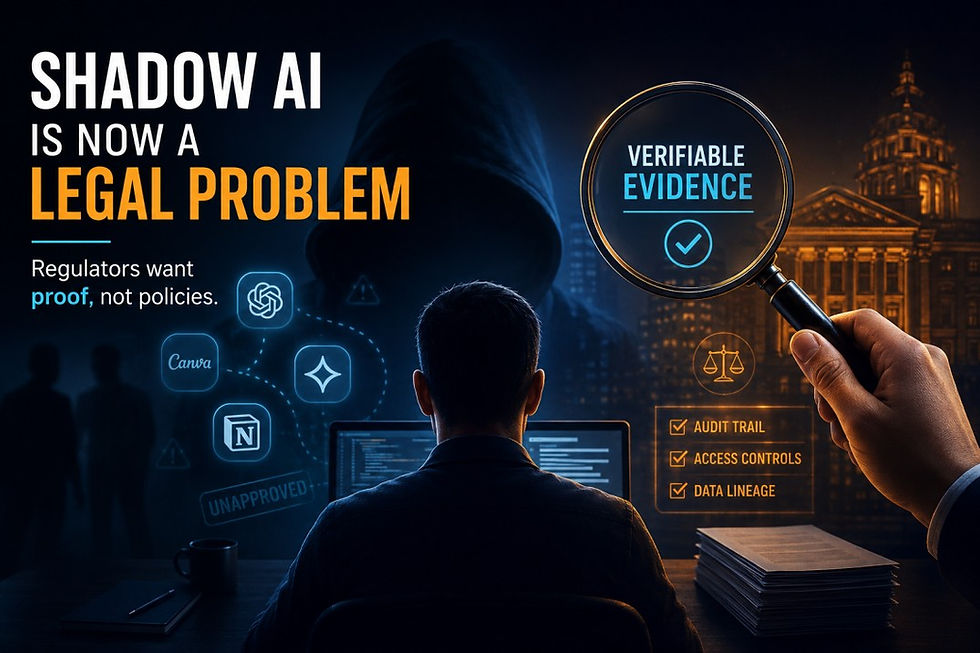
“Shadow AI” — unapproved use of generative AI tools — is everywhere. Employees are using GenAI to code, write, plan, analyze… without policies. Boards are often the last to hear about it.
Cyber risk continues to outpace cyber readiness
Attacks are getting more aggressive, automated, and AI-driven. Meanwhile, many organizations still think antivirus + firewalls = protection.
The Core Idea: Accelerating the Board Learning Curve
Here’s the good news: Boards don’t need to become cyber analysts or AI engineers. But they do need to develop enough understanding to challenge, guide, and govern — confidently.
That’s where the idea of accelerating the board learning curve comes in.
Think of it this way: The business is evolving in real time. The threats are evolving in real time. And if the board’s knowledge is evolving on an annual cycle… well, you can guess what happens.
Accelerating the board learning curve means shifting from passive awareness to active, ongoing, structured learning. It’s not about memorizing technical jargon — it’s about building fluency in the concepts that matter for governance.
It’s about being able to ask questions like:
“What’s the business case for this AI deployment?”
“How does this model handle bias and data security?”
“What’s our backup plan if the AI system fails?”
“How quickly can we detect and contain a breach?”
“How does this align with our risk appetite and long-term strategy?”
Not technical questions. Governance questions.
Acceleration also means building processes and structures that ensure the board isn’t catching up — it’s staying ahead. That might be through expert briefings, new committees, dashboards, or redesigned reporting formats. We’ll get to all of that.
What matters here is the mindset shift: AI and cybersecurity governance isn’t a one-time update. It’s not a “read the briefing, check the box” kind of situation.
It’s an ongoing capability — a muscle the board has to build.
And once that muscle starts strengthening? Boards actually become more confident, more strategic, and more decisive — because they’re no longer reacting to trends… they’re anticipating them.
Alright. Now let’s get into the practical stuff.
Step 1: Build AI & Cyber Competence Across the Board
Let’s start with the obvious: a board can’t oversee what it doesn’t understand. Directors don’t need to become data scientists or cybersecurity engineers, but they do need enough fluency to ask the right questions and recognize when something doesn't smell right.
The boards that get this right treat learning as an ongoing habit, not a weekend workshop. They bring in outside experts who aren’t afraid to challenge management, they add tech-savvy directors when needed, and they lean on advisory panels to close gaps quickly.
Most importantly, they insist on plain-English reporting. No jargon. No technical overload. Just clear dashboards, risk heat maps, and summaries that help directors make confident, informed decisions.
Once that baseline competence is in place, everything else — oversight, policy-setting, crisis readiness — becomes a whole lot easier.
Step 2: Define Clear Oversight and Governance Structures
AI and cybersecurity can’t float around the board agenda without an owner. Someone — or some committee — needs to be clearly responsible.
Whether oversight sits with the full board, the audit committee, the risk committee, or a dedicated technology committee doesn’t matter as much as the clarity itself. What’s essential is knowing who reviews what, how often, and when issues need to be escalated.
This alignment keeps responsibilities from slipping through the cracks and ensures management knows exactly what the board expects. As the company’s digital maturity grows, these structures should grow with it. Oversight isn’t static — it evolves along with the business.
Step 3: Create and Maintain Robust AI & Cyber Policies
Policies are where intentions turn into real guardrails. And in today’s world, relying on informal rules or outdated policy documents is a recipe for trouble.
Boards need to make sure the organization has living, practical policies for both AI and cybersecurity — ones that evolve as fast as the technology does.
A strong AI policy sets boundaries around what’s allowed, what’s off-limits, and how data and IP are protected. It also ensures human oversight, fairness, transparency, and guards against “shadow AI” creeping into daily work.
Cybersecurity policies should be just as clear: incident response plans, access controls, encryption requirements, vendor assessments, and employee training.
These policies don’t just guide behavior — they shape culture. And that’s squarely a board responsibility.
Step 4: Integrate AI & Cyber Risk into Enterprise Risk Management (ERM)
AI and cybersecurity shouldn’t sit in a corner like special projects. They belong in the company’s core risk framework — right alongside financial, regulatory, and operational risks.
This means assessing AI’s impact before deployment, understanding potential ethical and reputational issues, and evaluating cyber vulnerabilities with the same seriousness as any other material risk.
Boards need clear, business-focused dashboards that make risk obvious at a glance — key risk indicators, heat maps, financial impact numbers, and trend lines that show whether things are improving or getting worse.
Using global standards like NIST and ISO helps create structure, but the real unlock happens when AI and cyber considerations show up in every major decision: budgeting, product planning, M&A, digital transformation — all of it.
Step 5: Treat AI & Cyber Risk as Ongoing, Not One-Time Issues
If there’s one mindset shift boards need, it’s this: AI and cybersecurity are never “done.”
Models evolve. Threats evolve. Regulations evolve. So board oversight has to evolve right along with them.
That means regular reviews instead of annual check-ins, continuous monitoring instead of reactive firefighting, and scenario planning that prepares directors for the “what if” moments before they happen.
The most future-ready boards aren’t waiting for the next breach or AI mishap. They’re building resilience into the system — making AI and cybersecurity permanent, non-negotiable parts of the governance agenda.
Conclusion: The Boards That Learn Fast Will Lead the Future
If there’s one truth that’s become impossible to ignore, it’s this: AI and cybersecurity aren’t waiting for anyone. Not for management. Not for regulators. Not for boards.
They’re reshaping markets today — quietly, quickly, and relentlessly.
And that’s why speeding up the board’s learning curve isn’t just a “good practice.” It’s a strategic necessity.
The boards that thrive in this era won’t be the ones who know every technical detail. They’ll be the ones who embrace continuous learning, ask sharper questions, challenge assumptions, and build governance structures designed for speed, clarity, and accountability.
In other words, the future belongs to curious boards. Boards that stay humble about what they don’t know, bold about what they must learn, and proactive about building oversight that matches the pace of innovation.
Our Directors’ Institute - World Council of Directors can help you accelerate your board journey by training you on your roles and responsibilities to be carried out efficiently, helping you make a significant contribution to the board and raise corporate governance standards within the organisation.



Comments